
Behind the Scenes – Construction Diary, Episode 4
Do you remember how the delicate aroma of coffee used to fill the breakfast restaurant? As you entered, the tempting breakfast buffet stretched along the entire wall to the right.
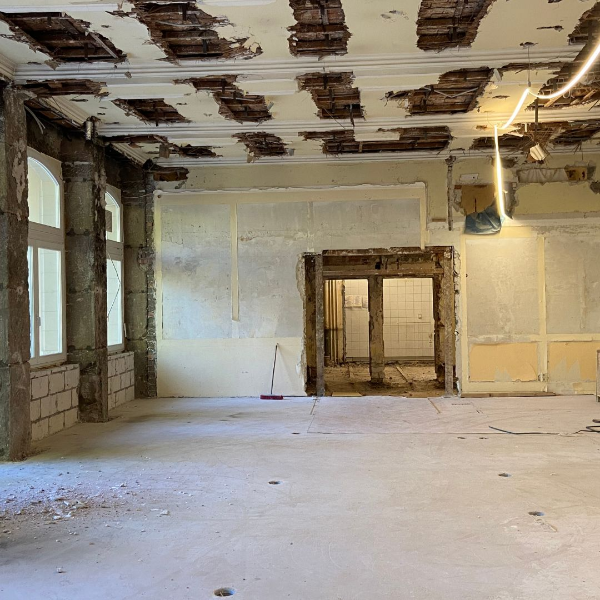
What you see now is a completely gutted space, which will later welcome conference guests and social events.
For now, however, let’s take a step back to the “good old days.”
The Holland Hotel Restaurant, circa 1900
Where ceiling spotlights once illuminated the room, gaping openings now reveal the original ceiling structure from 1900. The ceiling was originally divided into generous coffers, their frames crafted from plaster.
At the far end, you can see the passage leading into the kitchen, while to the left the tall, expansive windows open toward the park. Massive stone blocks form the columns between the windows. Incredible, isn’t it?
In Search of Colors
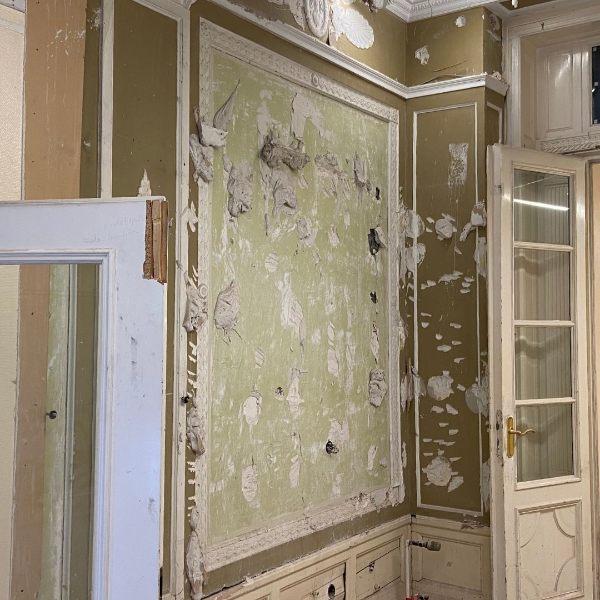
The wonderful thing about a renovation is that it often allows you to rediscover original color details—like here, in front of the entrance to our breakfast restaurant. Green still appears in a few rooms as fragments, usually combined with a softer shade of green and delicate plaster moldings.
Looking at today’s color trends on Instagram, it’s remarkable how close we were back then. Fascinating, isn’t it?
That’s why our interior designers have drawn inspiration from this shade of green and will be incorporating it into several public areas of the hotel. It also helps create a harmonious transition from the spacious halls to the hotel park.
Step Back to the Restaurant of 1900
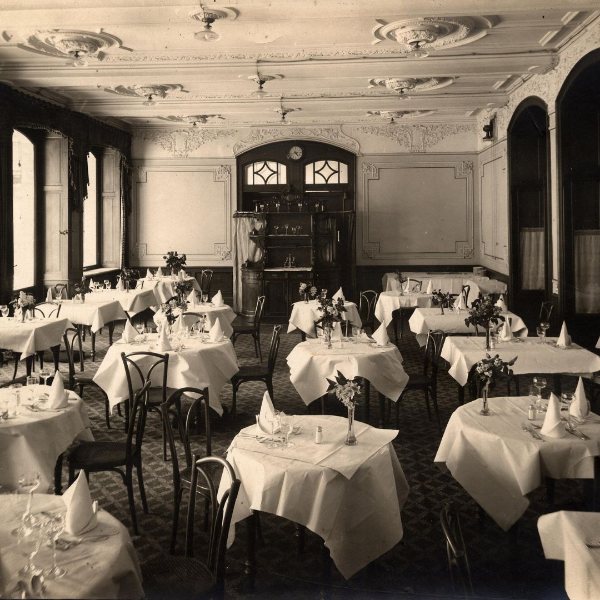
The intricate plasterwork on the walls and ceilings is truly impressive. The beautiful Art Nouveau ornaments in the wall coffers were already decorative enough, no additional paintings were needed. Take a look at the ceiling: tiny electric lights once added a special atmosphere to the room.
The elegant entrance to the kitchen immediately catches the eye. The buffet not only provided practical storage but also cleverly concealed the kitchen’s entry and exit points. Do you notice the curtains that skillfully hid this area? Following a one-way system, the staff would enter from one side and return to the kitchen from the other.
Also worth noting are the heavily starched tablecloths. At the time, linens were likely washed and meticulously ironed in-house – a true testament to the hotel’s high standards.
Particularly remarkable are the load-bearing columns between the windows, made of solid natural stone. The accompanying wooden paneling, which further adorned the room, unfortunately survives only in old photographs.
Breakfast à la Carte
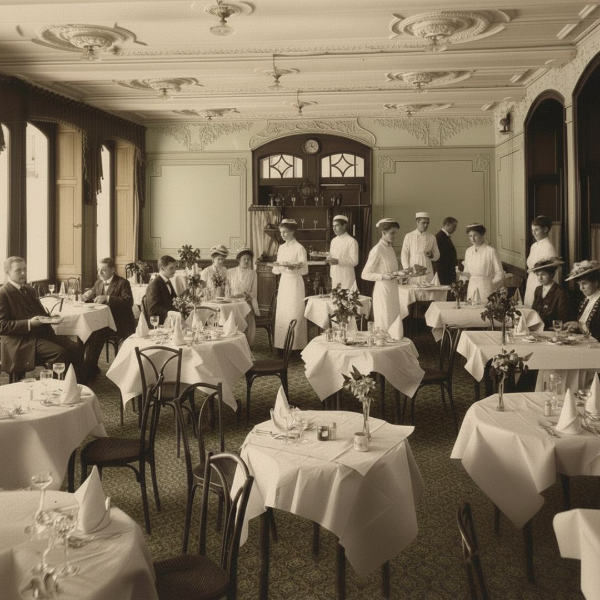
What might breakfast have looked like back then? The Femme de Service certainly wore a small white cap and a heavily starched, long apron. Guests were expected in large numbers, and the entire staff had already taken their positions.
The tablecloths could be cleaned right on the premises, as the Grand Hotel was already equipped with an electric washing machine. The kitchen even had a dishwasher, and a central steam heating system was part of the facilities. What now seems nostalgic in old photographs was extremely modern at the time. After all, all the lamps and chandeliers were electric.
Following its renovation and major expansion around 1900, the Holland Hotel was considered the most modern hotel of its era: a perfect combination of elegance, comfort, and technical innovation.



 Schwarzwaldgeier e.V.